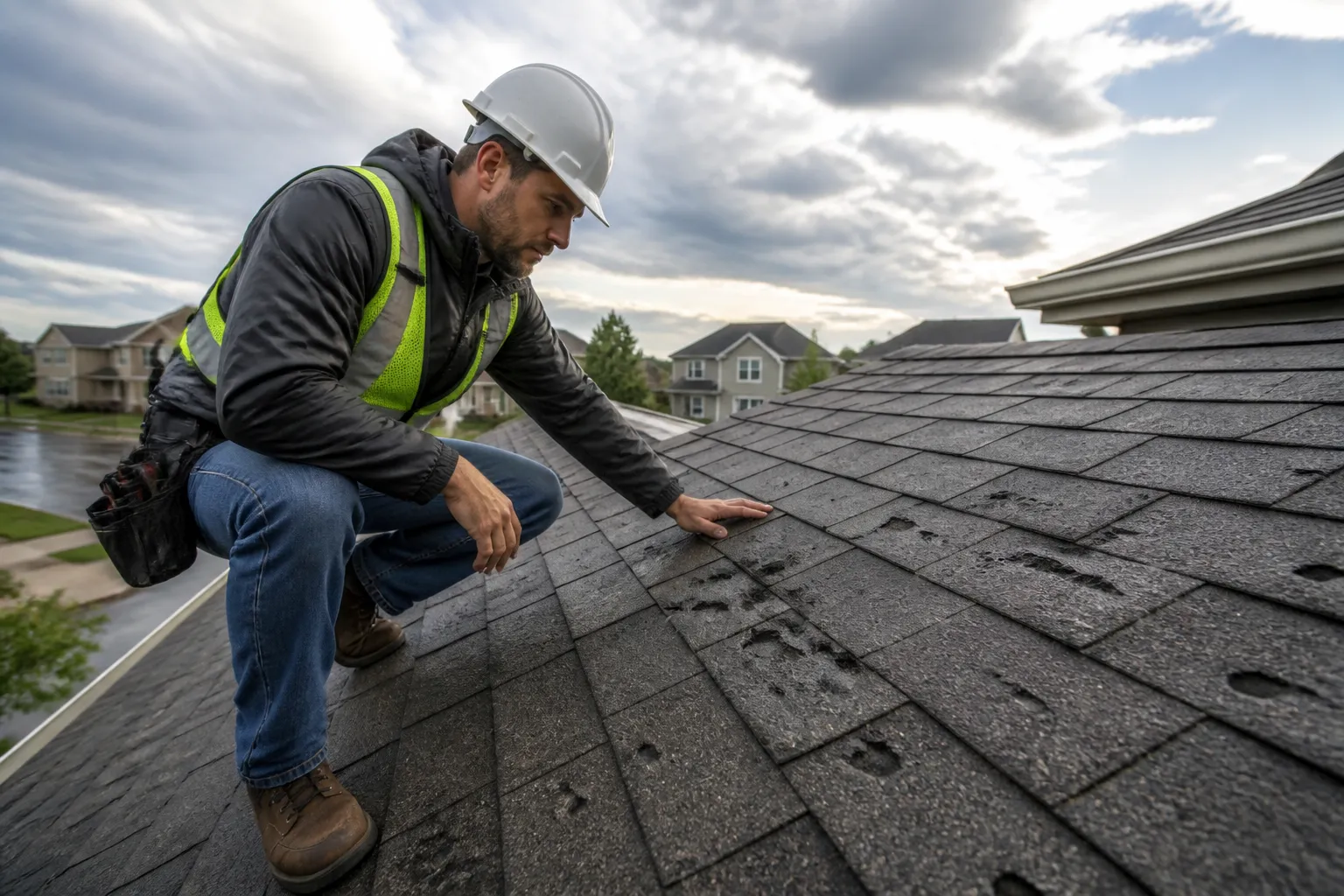
Normal Elite Roofing handles hail damage roof repair for homes and businesses in Normal and Bloomington. After a hailstorm, the roof may look fine from the ground, yet a few shingles could be bruised, cracked, or loosened enough to let water start working underneath. You might notice granules in the gutters, dents on vents or flashing, or a ceiling spot that appears days after the storm.
Normal Elite Roofing helps Bloomington property owners sort out hail damage with clear roof inspections and practical repair recommendations. If you suspect your roof took a hit, we can assess the condition, explain what needs attention, and help you choose the next step before a small problem becomes a larger one.
Hail damage is not always dramatic. Some roofs show obvious breaks, while others have subtle marks that become a problem later. A careful look after a storm can help you catch the early clues.
If you see one sign, there may be more damage out of sight. That is why a roof inspection matters after hail has passed through Bloomington.
Hail damage depends on the size of the hail, the roof material, and how long the roof was exposed during the storm. Even when shingles stay attached, the impact can weaken the surface and shorten the life of the roof.
Asphalt shingles can lose protective granules when struck. Once that outer layer wears away, the shingle takes on more weather stress and becomes more vulnerable to leaks.
Hail can bend or dent flashing around roof intersections, vents, and skylights. Those spots matter because they help seal the seams where leaks often begin.
When hail loosens a shingle or opens a small crack, water may not enter right away. It can work through slowly, making the damage harder to spot until interior staining appears.
A hail damage roof repair visit should do more than glance at the surface. We look for signs that help show whether the roof needs a repair, more targeted replacement work, or a deeper evaluation of the affected area.
We check for impact marks, loose shingles, lifted edges, and granule loss across the roof surface.
We examine vents, flashing, skylight areas, and other roof details that often show hail impact first.
We look for interior or attic signs that may point to moisture entering through damaged roofing materials.
We explain what should be fixed now, what can be monitored, and where the roof may need closer attention.
Normal Elite Roofing aims to make that process straightforward, so Bloomington homeowners can understand the condition of the roof without guesswork.
Not every hail-damaged roof needs the same solution. The right repair depends on how widespread the damage is and how the roof is performing overall.
If hail damage is limited to one section, individual shingles or small areas may be repaired to restore protection and help the roof continue doing its job.
If the storm bent metal components or opened seams near roof penetrations, repairing those details can stop water from reaching vulnerable spots.
When hail damage is widespread or the roof is already near the end of its service life, replacement may be the more practical path. We can help you compare the condition of the roof so you are not over- or under-fixing the problem.
The time right after hail matters. A roof may continue to shed granules or reveal leaks over the days that follow, so paying attention early can save hassle later.
If you are checking your property after a storm, start with a few simple observations:
Those details help connect the damage to the hail event and make the roof evaluation more focused.
Hail affects different roofing materials in different ways. We work with a range of roof types and related exterior details commonly found on Bloomington properties.
We handle hail-related concerns on roof systems that include roof replacement projects, roof inspection findings, flat roof repair needs, metal roof repair concerns, slate roofing considerations, and hail damage roof repair work tied to storm impact.
Hail can also affect skylight installation areas, siding installation surfaces, siding repair needs, gutter installation points, and gutter repair spots when the storm hits with enough force.
That broader view matters because roof damage does not always stay confined to one material. A clear inspection helps show how the roof and nearby exterior parts were affected together.
Some property owners call after seeing a ceiling stain. Others notice gutter debris, roof shingle pieces on the ground, or a different look to the roof surface after a storm. Hail can also leave damage that is easy to miss from a driveway view, especially when the roof still looks intact at a glance.
If you own a home or manage a business property, it helps to stay alert to these changes:
Normal Elite Roofing serves Bloomington with repair and inspection services focused on helping you understand the roof’s condition and the next practical step.
If your insurance may cover storm damage, get the inspection done before you sign anything.
The clearest clues are bruised shingles, missing granules, cracked edges, dented metal details, or new water stains. Some damage is subtle, which is why a roof inspection is useful after a hailstorm.
Yes. A roof may look fine right away and still develop leaks later if hail weakened shingles or flashing. That is why follow-up attention matters after the storm passes.
No. Some roofs only need targeted repair work, while others may be damaged enough to justify replacement. The right choice depends on the extent of the impact and the roof’s overall condition.
Start with shingles, gutters, flashing, vents, and skylight areas. These are common places where hail leaves visible marks or opens a path for water.
Granules protect asphalt shingles from weather exposure. When hail knocks them off, the shingle surface becomes more vulnerable and may wear out sooner.
Document where the leak appears, note when it started, and schedule a roof inspection as soon as possible. That helps connect the leak to possible hail-related damage and points toward the right repair.
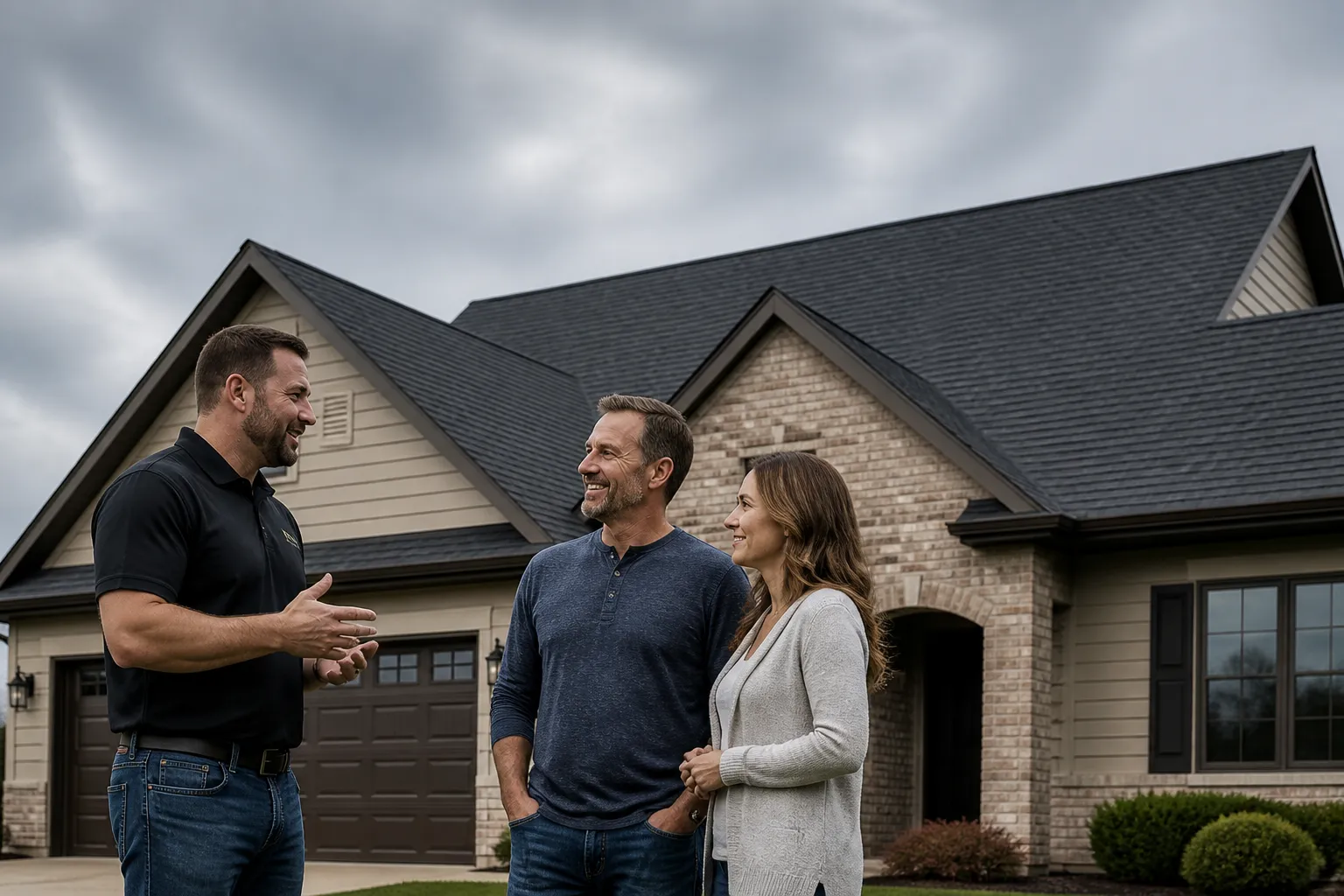
If your Bloomington roof was hit by hail, Normal Elite Roofing can help you sort out the damage and decide on the next step with less stress. We serve homeowners and businesses that need a clear answer after a storm, along with repair work that matches the roof’s actual condition.
Call +13093227715 or visit 716 E Empire St #2, Bloomington, IL 61701 to get started. Our hours are Monday through Saturday, 8:00 AM to 8:00 PM.
Get Started
Share what you are seeing on your roof, and we will help you understand the next best step, whether that means a repair, inspection, replacement, or storm damage evaluation.