Normal Elite Roofing put this guide together for homeowners in Normal and nearby towns. Roof damage does not always wait for warm weather. A wind-blown shingle, active leak, loose flashing, or storm opening may need attention during winter, while an aging roof that is still dry may be better planned for a milder season. Roofing can be completed in some winter conditions, but the decision depends on weather, material requirements, roof condition, safety, and the scope of work.
Weather determines what is safe and practical
Snow, ice, high winds, wet surfaces, and low temperatures can make roof work unsafe or limit how materials perform. Shingles can become brittle in the cold and may not seal as readily until temperatures improve. Sealants, adhesives, underlayments, and other products may have installation requirements set by their manufacturers. A responsible contractor plans around those conditions instead of treating every cold day as suitable for any project.
A clear, dry weather window may allow targeted repairs or a larger project when crews can protect the property and follow material guidance. Forecasts are important because a roof should not be left exposed before snow, rain, or wind arrives. Ask the contractor about the work sequence, how each day will end with the roof protected, and what happens if weather interrupts the schedule.
Temporary protection versus permanent repair
An active leak may call for immediate temporary weather protection or a focused repair while a full replacement is planned. The goal is to limit further interior damage and preserve options. A temporary measure does not necessarily solve every underlying issue, so ask what it is intended to address and what follow-up work may be needed when conditions improve.
Water can enter through a small opening and travel along roof decking or framing before it appears inside. If you see a stain or drip, move belongings, contain water, and photograph the condition. Note whether it occurs during wind, snowfall, thawing, or rain. Do not climb onto a snowy or icy roof. Ground-level photos and a professional inspection are safer and often more useful.
Questions to ask before scheduling
Ask whether current and forecast conditions are suitable for the proposed material and work. Confirm how snow and debris will be managed, how driveways and landscaping will be protected, and how work areas will be secured. For a replacement, ask about tear-off, decking inspection, underlayment, flashing, ventilation, cleanup, and contingency plans for weather delays.
Also ask whether a repair can safely bridge the roof to spring or whether waiting creates too much water risk. A dry roof that is simply old is different from a roof with active water intrusion. There is no one answer for every home. The roof condition and the weather window should guide the recommendation.
Do not delay an inspection for a possible leak
Even when permanent work must wait, an inspection can identify risks and help you plan. Normal Elite Roofing can assess winter roof concerns in the Normal and Bloomington area and explain whether immediate repair, temporary protection, or scheduled replacement is appropriate. The objective is not to force a project into poor conditions. It is to protect the home and choose the safest workable plan.
How cold affects materials
Asphalt shingles rely on heat from the sun to seal their adhesive strips. In cold weather, that seal may take longer to form. Shingles can also become stiff and more likely to crack if handled roughly. Roofers may hand-seal shingles or wait for a mild stretch of days. Ask your roofer how they handle sealing in cold weather and what the manufacturer recommends.
Safety comes first
Ice, frost, and snow make roofs slippery. Short winter days also limit working hours. Good crews stop work when conditions are unsafe. That can stretch the timeline, so plan for some flexibility.
Planning a winter project
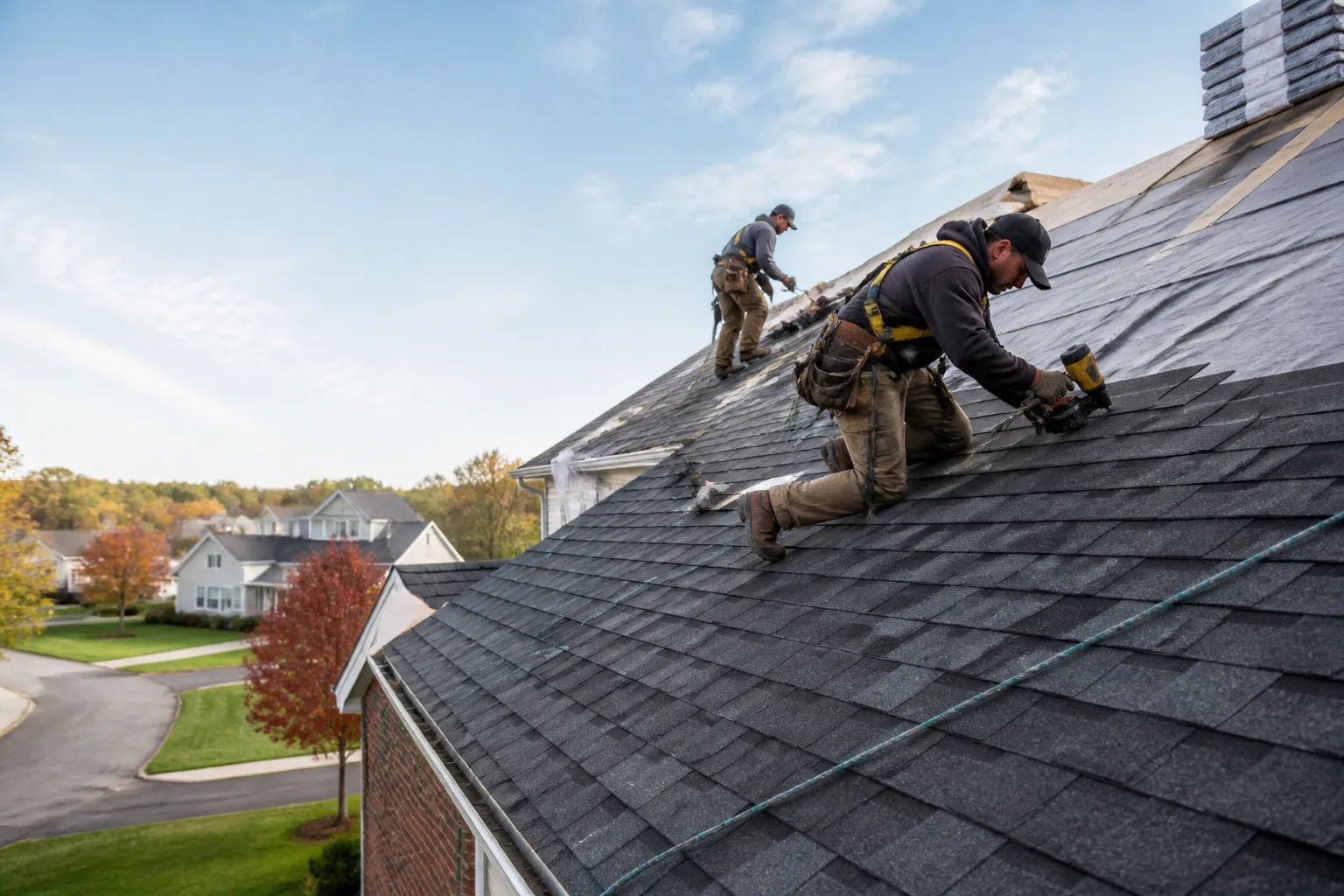
- Schedule tear-off on days with a clear forecast so the roof is not left open.
- Ask how the crew will protect the house if weather turns.
- Clear snow from driveways and walkways so the crew can work safely.
- Expect start dates to shift based on the weather.
Emergency repairs
Some problems cannot wait for spring. A tarp or temporary patch can stop water from getting in until a permanent fix is possible. Typical roof repairs cost $380 to $1,800, about $1,100 on average, per Angi. Getting a quick temporary fix often prevents much bigger damage to ceilings and insulation.
Is waiting until spring better?
If your roof is not leaking and the damage is minor, waiting for warmer weather can make sense. Shingles seal better, days are longer, and crews can work faster. If water is already getting in, waiting can cause damage to insulation, drywall, and framing. In that case, a temporary fix now and a full repair later is often the smart path.