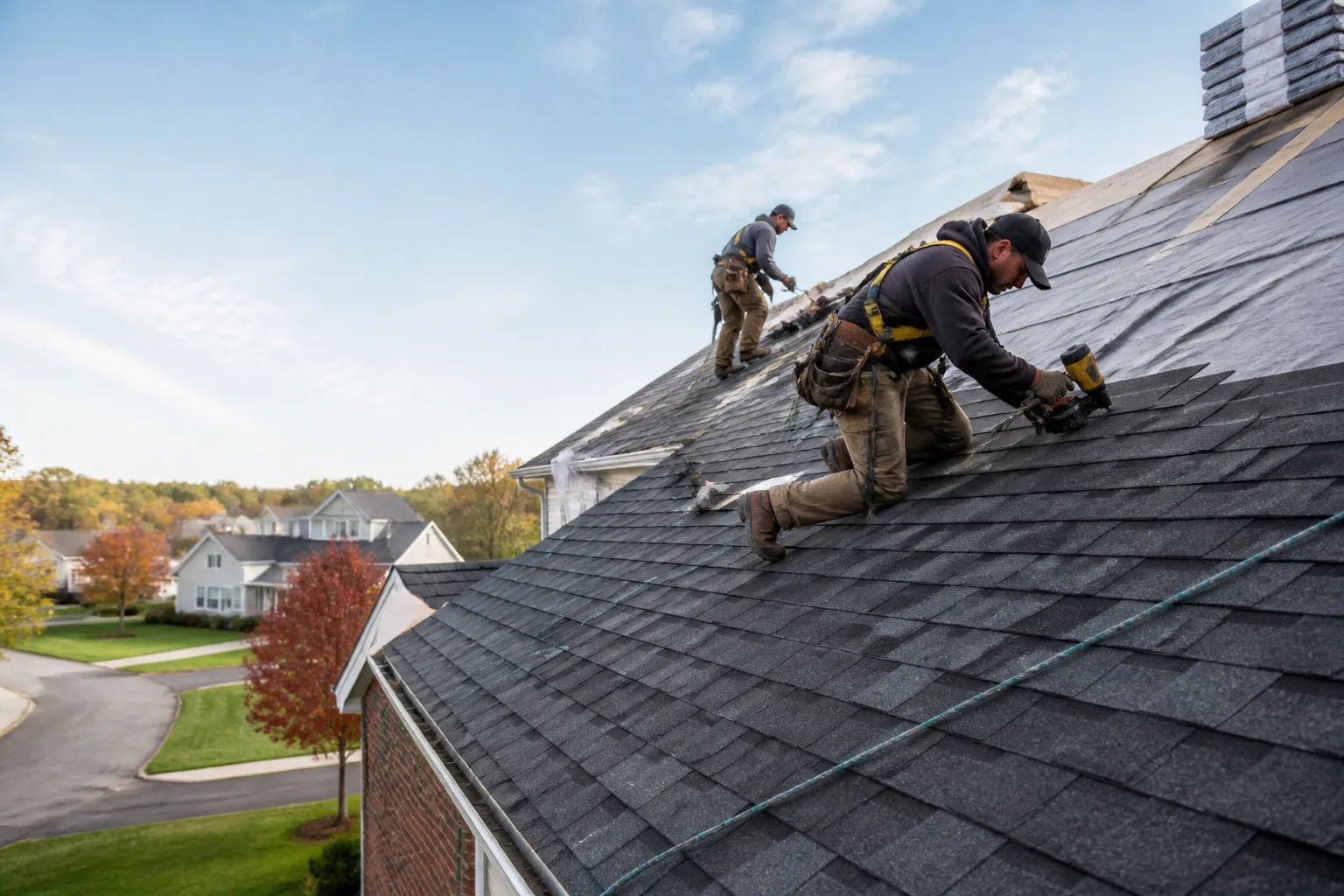
Normal Elite Roofing put this guide together for homeowners in Normal and nearby towns. When a roof leaks or shingles look worn, homeowners often want a simple answer: repair it or replace it. The right choice depends on the roof’s age, the size and location of damage, the condition of surrounding materials, prior repairs, and whether a reliable repair can protect the home for a reasonable period. A careful inspection should lead the decision, not a single ceiling stain or a guess from the ground.
When a repair may be the sensible choice
A focused repair can make sense when damage is isolated and the rest of the roof remains in good condition. Common examples include a small flashing issue, a few shingles lost to wind, a localized leak around a pipe vent, or damage from a fallen branch. The repair should correct the source of the water entry, not merely cover the indoor evidence of a leak.
A newer roof with one clear problem may have many useful years remaining. During an inspection, nearby shingles, valleys, ridges, vents, chimneys, and roof transitions should be reviewed to make sure the visible issue is not part of a wider pattern. Ask whether replacement shingles can reasonably match the existing roof. Weathering can make an exact color match difficult, even when the same product is available.
Signs replacement deserves discussion
Replacement may be more practical when shingles are widely brittle, curled, cracked, or losing granules. Repeated leaks in different locations, broad wind damage, extensive storm impacts, and materials nearing the end of their useful service life can also change the calculation. If repairs expose widespread soft decking or long-term moisture damage, it may be time to consider a larger roof-system solution.
Multiple repairs do not automatically mean a roof must be replaced. Still, it is useful to look at the pattern. Are the repairs isolated to one known area, or does a new problem appear each season? Is the roof dry between repairs? Are materials too aged to work with safely? Are attic heat loss, ventilation, or drainage issues reducing the roof’s performance? These questions help turn a reactive repair cycle into a practical plan.
Do not diagnose from the stain alone
Water can travel along framing before it appears indoors, so a stain is not necessarily below the roof opening. Condensation, plumbing, siding transitions, and window details can also create interior moisture. A roofer should trace the likely pathway and evaluate the relevant roof components. Likewise, a roof that looks old from a driveway may still be repairable. Roof condition is more informative than appearance alone.
Compare complete scopes of work
A repair proposal should identify the location, materials, and expected work. A replacement proposal should describe removal, decking inspection, underlayment, flashing, ventilation, property protection, cleanup, and disposal. Ask how concealed damage will be documented and priced. Comparing these details is more useful than comparing totals that may not cover the same work.
Consider your future plans for the home as well. A repair may be a sound solution when a roof has good remaining life and a specific problem. A replacement may be easier to justify when broad wear continues to create water risk. Neither option should be presented as automatic without explaining the roof conditions that support it.
Get clear information before deciding
Normal Elite Roofing can inspect roofs in Normal and Bloomington, explain whether a repair is reasonable, and outline replacement options when the condition calls for it. The goal is a recommendation that fits the roof you have, the risk you are seeing, and the work needed to keep water outside.
Questions to ask your roofer
- How many years of life does the current roof have left?
- Is the damage in one spot or spread across the roof?
- Will a repair match the existing shingles?
- Is there damage to the wood decking underneath?
- Would a partial replacement make sense?
Partial replacement
Angi notes that if only part of the roof needs work, a partial replacement is possible. You will still pay for permits and removal, and the cost per square foot may be higher, but the total is lower. Keep in mind that new and old shingles may not match in color.
Think long term
If several repairs are coming up in the next few years, one full replacement may cost less in the long run. A new roof also gives you a fresh warranty.
Insurance and storm damage
If the damage came from a storm, your insurance policy may affect the decision. Some claims cover repairs, others cover full replacement. Get a written inspection report and talk to your insurance company before choosing. Keeping photos and receipts makes the claim process smoother.